
Breath Awareness for Energy Flow
By Kiran Wu / Oct 16
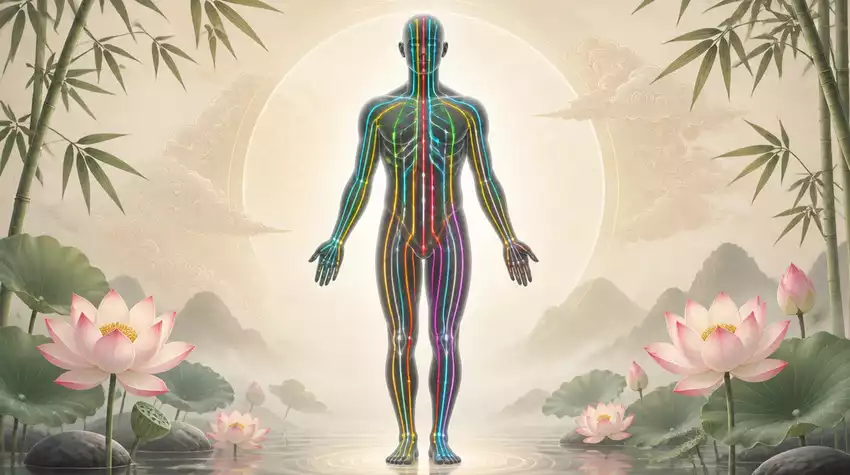
In the realm of health and wellness, few concepts are as intriguing as the meridians of Traditional Chinese Medicine (TCM). These energy pathways are not just theoretical ideas; they are the invisible highways that connect our organs, emotions, and overall well-being. As we explore the twelve primary meridians, you will uncover a holistic approach to health that has stood the test of time.
The twelve primary meridians are crucial for understanding Traditional Chinese Medicine. Below is a visualization of their classification into yin and yang categories, along with their associated organs. For a deeper dive into how these pathways influence our overall vitality, explore the concept of understanding energy flow in TCM.
In Traditional Chinese Medicine (TCM), the concept of the twelve primary meridians is fundamental. These meridians act as essential channels throughout the body, connecting to various organ systems and facilitating the flow of qi, or life force. Just as roads connect different cities, these meridians link our organs and tissues, ensuring that energy moves freely and harmoniously.
Understanding these meridians allows us to appreciate how energy influences our health and well-being. When we talk about meridians, we're looking at pathways that can either promote health or contribute to imbalance when they become blocked. By exploring their role, we can gain insight into how TCM approaches health in a holistic way.
The twelve primary meridians are divided into two categories: yin and yang. Each meridian corresponds to specific organs and plays a unique role in maintaining balance within the body. The major meridians include:
Each of these meridians connects to vital organs, enabling the flow of energy throughout our bodies. At The Meridian Connection, we aim to illuminate how these connections work, empowering you to understand your own energy flow better! For more detailed insights into how these pathways are utilized in therapy, consider exploring meridian pathways in acupuncture explained.
Meridians play a crucial role in various aspects of health. They influence not just energy balance but also blood circulation and overall body function. When acupuncture is applied to these meridians, it can stimulate energy flow, helping to restore balance and alleviate discomfort.
Consider how meridians impact your daily life. When you experience stress or physical ailments, it’s like a traffic jam in your body’s energy highways. Here are some key ways meridians contribute to your well-being:
By understanding the importance of these channels, we can take steps towards maintaining a harmonious balance of mind and body. It's all about nurturing our energy! 🌟
Have you ever noticed that when you're feeling down, your energy feels low, too? This connection is no coincidence. In TCM, the state of our emotions is closely tied to the health of our meridians. Blockages in energy can lead to emotional struggles, affecting our mental health.
Each meridian is also linked to specific emotions. For instance, the liver meridian is associated with anger, while the heart meridian connects to joy. Understanding these associations can provide insights into your emotional state. Here’s how emotional health relates to the meridians:
By tuning into our emotional health and recognizing how it connects to our energy flow, we can embark on a journey towards holistic wellness. Remember, understanding is the first step towards healing! 🧘♀️
The classification of meridians in TCM is significant for understanding their unique qualities. As we delve deeper into this topic, it becomes clear that the yin and yang duality is foundational for maintaining balance within our bodies. Join me as we explore this crucial aspect of Traditional Chinese Medicine!
Here's a brief recap of the key points discussed so far:
As we delve into the rich tapestry of Traditional Chinese Medicine (TCM), the concept of meridians emerges as a vital thread. Understanding the historical context of the twelve primary meridians not only enriches our knowledge but also connects us to the practices of those who came before us. At The Meridian Connection, I believe it’s essential to explore how these ancient theories have evolved and adapted to modern practices, providing us with a more comprehensive view of our health and well-being.
The history of meridian theory dates back thousands of years, originating in ancient Chinese texts. Over time, the understanding of meridians has transformed, aligning itself with contemporary medical practices while maintaining its core principles. This evolution highlights the adaptability of TCM, making it relevant even in today's fast-paced world.
The journey of meridian theory is fascinating! It began with ancient philosophers and physicians who observed the interconnectedness of the body and the flow of energy. They documented their findings, laying the foundation for what we now know as the twelve primary meridians. This historical context not only provides insight into early medical practices but also showcases how humanity has always sought to understand health.
As TCM spread to different cultures, these ideas were interpreted and integrated into various medical systems. This cross-pollination enriched both TCM and modern medicine. Today, we see a blend of traditional wisdom and contemporary scientific understanding, creating a holistic approach to health that resonates deeply with many, including myself as a practitioner.
Modern research has begun to shed light on the ancient concepts of meridians, leading to intriguing discoveries. While some traditional viewpoints may seem abstract, many contemporary practitioners find value in evidence-based studies that support the existence and importance of meridians. Here’s how modern interpretations are aligning with ancient practices:
By marrying these historical insights with modern evidence, we can appreciate the depth of TCM and its relevance in our lives today. The Meridian Connection aims to bridge this gap, offering resources to help you understand these concepts in practical terms. For a deeper look at the scientific backing for these practices, check out meridians and acupuncture treatment outcomes.
In clinical settings, the application of meridian theory continues to thrive. TCM practitioners utilize the knowledge of meridians to diagnose and treat a wide range of health issues. Here are some key clinical applications that highlight the practical use of meridian theory:
This blend of traditional wisdom and modern clinical practices forms a powerful approach to health and wellness, allowing individuals to tap into their body’s innate healing abilities.
As we continue our exploration of meridians, it’s important to clear up some common misunderstandings. Many people have questions about the differences between types of meridians and how they function within TCM. At The Meridian Connection, I strive to demystify these concepts to help you navigate your own journey toward holistic health.
One common source of confusion lies in the terminology surrounding meridians. Here’s a breakdown to clarify these terms:
Understanding these distinctions helps us appreciate the complexity of the body’s energy system and its profound impact on our well-being.
Here are some of the most common questions people ask about meridians:
The twelve primary meridians are fundamental energy pathways in the body that connect to specific organ systems. They are categorized into Yin meridians (Heart, Liver, Spleen, Kidney, Lung, Pericardium) and Yang meridians (Stomach, Gallbladder, Large Intestine, Small Intestine, Bladder, Triple Warmer).
Meridians are crucial for facilitating the flow of qi (life force), enhancing blood circulation, supporting organ function, and alleviating pain. Balanced energy flow within these meridians contributes to overall physical and emotional health.
In TCM, emotional states are closely linked to the health of our meridians. Blockages in specific meridians can lead to emotional disturbances, while free-flowing energy promotes emotional balance. For example, the liver meridian is associated with anger, and the heart meridian with joy.
While traditional meridian theory is ancient, modern research suggests correlations between meridian pathways and neuroanatomy. Studies indicate that acupuncture points on meridians can stimulate physiological responses that enhance healing and align with mind-body connections.
TCM practitioners use meridian theory for diagnosis and treatment through methods like acupuncture (inserting needles along specific pathways to restore qi flow), herbal medicine (formulating remedies to target meridians and support organ function), and health assessments to identify energy imbalances.
Primary meridians are the twelve main pathways directly connected to organs and systems. Extraordinary meridians are additional, deeper pathways that store and regulate qi but do not directly correspond to specific organs, offering broader regulatory functions.
Many people have questions about how meridians work and their relevance in daily life. Here are a few frequently asked questions:
By addressing these questions, I hope to empower you with the knowledge to better understand your own energy flow and health.
It’s essential to clarify common misconceptions related to acupuncture and meridians. Some people think that acupuncture only targets pain relief, but it’s much more than that. Acupuncture aims to balance energy throughout the meridians, addressing various physical and emotional issues. By dispelling these myths, I hope to encourage a deeper appreciation for the holistic nature of TCM. To learn more about how acupuncture works with these energy pathways, explore understanding acupuncture and meridians.
In summary, the twelve primary meridians are not just theoretical constructs; they are integral components of our health in TCM. Understanding their historical context, modern interpretations, and clinical applications helps us appreciate their significance in our lives. The journey toward understanding meridians is a pathway to personal health and wellness!
As we conclude this exploration, I invite you to delve deeper into the fascinating world of Traditional Chinese Medicine. Whether through acupuncture, herbal remedies, or simply learning more about meridians, your journey toward holistic wellness can begin right here at The Meridian Connection. What aspects of TCM resonate with you? The exploration is just beginning, and together we can uncover the profound benefits of understanding and balancing our energy! You can also find more ways to improve your well-being by learning about recognizing and restoring your qi.
Here is a quick recap of the important points discussed in the article:
By Kiran Wu / Oct 16
By Kiran Wu / Oct 11
By Kiran Wu / Oct 04